

Bugatti Destrier Turns the Bolide Into a One-of-One Design Statement
The Bugatti Destrier expands the French marque’s exclusive Solitaire programme with a one-of-one interpretation of the Bolide track car. Rather than retaining the extreme aerodynamic language of its circuit-focused predecessor, the Destrier presents the underlying carbon architecture as a sculptural form.
The result is a lower, cleaner and more refined hypercar that connects Bugatti’s motorsport heritage with contemporary coachbuilding. Moreover, the Destrier retains the Bolide’s 1,578-horsepower, quad-turbocharged 8.0-litre W16 while shifting its focus from lap times to craftsmanship.
Bugatti Destrier Redefines the Bolide’s Architecture
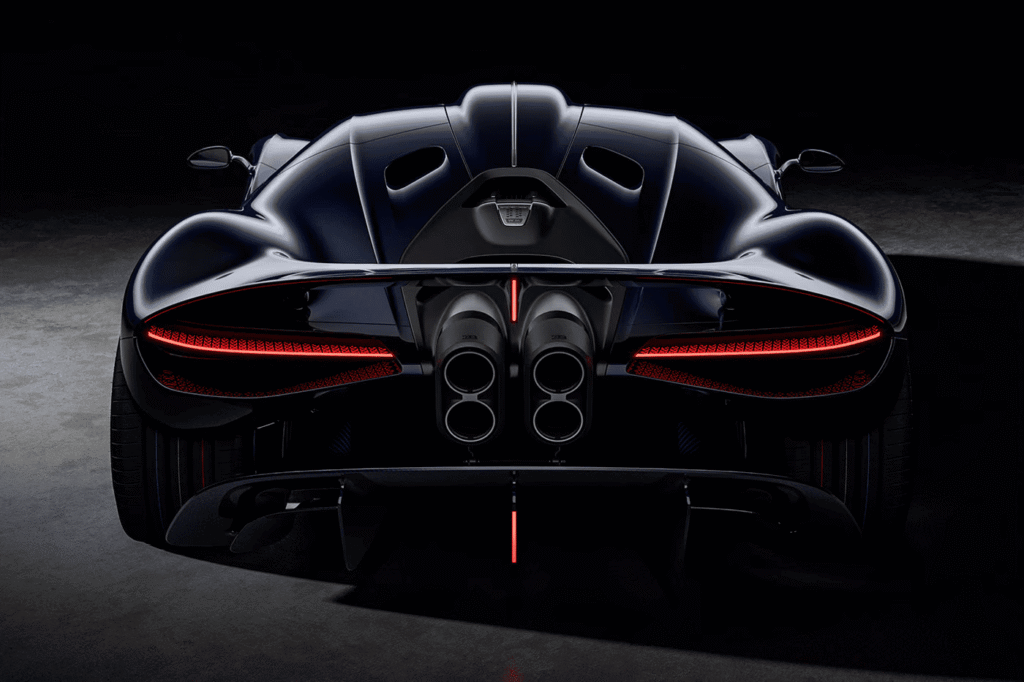
The Destrier removes the Bolide’s aggressive winglets and extensive rear aerodynamic hardware. Instead, it uses a flatter spoiler and a streamlined body that stands just one metre tall.
At the front, sharply rising flared fenders emphasize the car’s low proportions. Meanwhile, staggered 20-inch front and 21-inch rear wheels reinforce its planted stance.
The signature C-shaped metallic streak remains a central visual element. By pushing the carbon tub forward, Bugatti creates greater visual emphasis around this distinctive design feature.
At the rear, the quad exhaust outlets remain, preserving a direct link to the Bolide. However, the X-shaped track lights have been replaced with a bespoke cross-shaped LED signature.
Bugatti design chief Frank Heyl has described the removal of aerodynamic constraints as an opportunity to approach the architecture as sculpture.

The Destrier is scheduled to make its global debut at the Pebble Beach Concours d’Elegance, placing the one-off commission within one of the world’s most prominent celebrations of automotive design and craftsmanship.
Sapphire Celeste Connects Past and Present
The exterior finish adds another layer of Bugatti heritage. Called Sapphire Celeste, the bespoke blue shade references the original colour of the Type 57SC Atlantic associated with Ralph Lauren.
The historical connection extends beyond colour. The Type 57SC road car and Type 57G racer represent two sides of Bugatti’s pre-war identity, with the latter securing victory at the 1937 24 Hours of Le Mans.
Consequently, the Destrier uses its visual language to connect road-going luxury with motorsport history. The result is less a conventional track-derived special edition and more a modern interpretation of Bugatti’s long-standing relationship between performance and design.
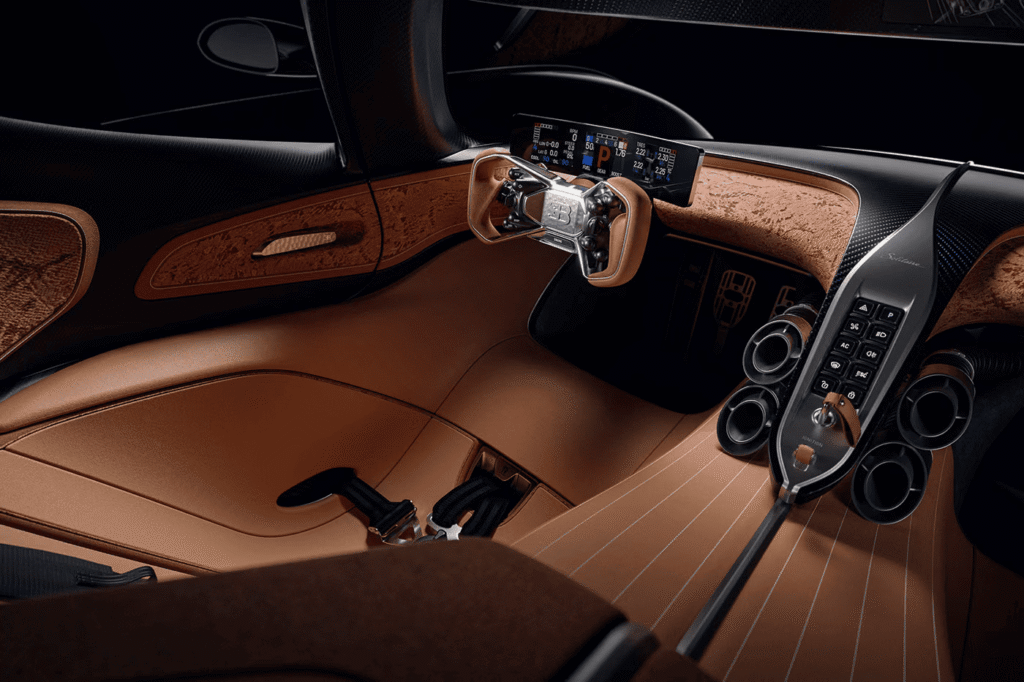
Inside, the transformation is equally pronounced. The cabin replaces the stark minimalism of a racing prototype with warm brown leather, nubuck and a distinctive 3D-knitted textile inspired by snakeskin.
The controls have also been reconsidered. Track-specific emergency switches give way to more elegant ignition controls, reinforcing the car’s shift toward grand touring luxury.
Despite these changes, the mechanical core remains formidable. The Destrier retains the Bolide’s 1,578-horsepower W16 engine, ensuring that its design transformation does not come at the expense of extreme performance.
Bugatti has not disclosed pricing for the commission. However, its one-of-one status and extensive bespoke treatment position the Destrier firmly within the upper tier of contemporary automotive coachbuilding.
Ultimately, the Bugatti Destrier demonstrates how an extreme racing architecture can become something more restrained without losing its visual or mechanical identity. Its significance lies not simply in its performance figures, but in how Bugatti turns engineering heritage into a highly individual piece of automotive sculpture.