
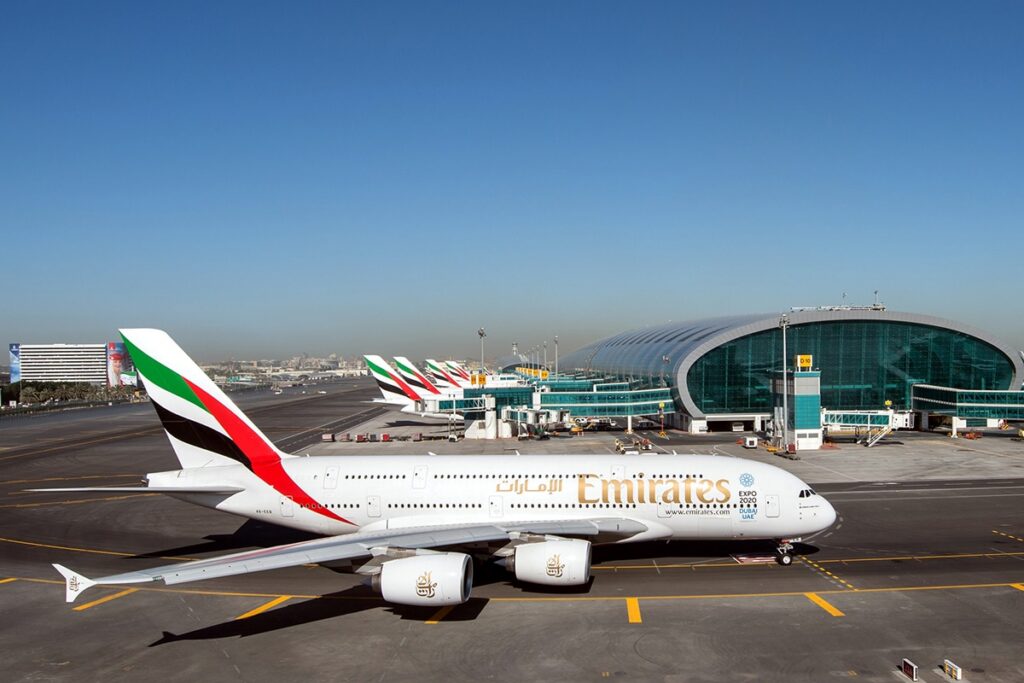
Emirates Group Reports AED 3.6B Profit
The Emirates Group recorded a profit after tax of AED 3.6 billion ($1 billion) during the first half of the 2026-27 financial year, maintaining profitability despite operational disruptions, Gulf airspace closures and rising global jet fuel prices.
Profit before tax stood at AED 4.1 billion ($1.1 billion), driven by sustained demand for premium travel and strong cargo revenues.
The Group generated EBITDA of AED 12.5 billion ($3.4 billion), while total revenue reached AED 66.2 billion ($18 billion).
The Group reported cash reserves of AED 54.1 billion ($14.7 billion) as of September 30, 2026, and paid a dividend of AED 2 billion ($545 million) to the Investment Corporation of Dubai (ICD).
HH Sheikh Ahmed bin Saeed Al Maktoum, Chairman and Chief Executive of Emirates Airline and Group, highlighted the resilience of the business model amid what he described as “unprecedented regional challenges”.
“Customer demand held firm and our cargo operations made a strong contribution, keeping revenue and cash levels healthy even as global jet fuel prices doubled, impacting our costs and profitability,” Sheikh Ahmed said.
He also acknowledged the UAE government’s effective coordination in facilitating the safe resumption of air transport and relaxing travel advisories, helping the airline restore stability across its network.
Emirates Airline posted a profit after tax of AED 3.3 billion ($903 million) on revenue of AED 56.9 billion ($15.5 billion). Profit before tax amounted to AED 3.7 billion ($1 billion).
Periodic airspace restrictions across the region prompted operational adjustments, resulting in total capacity of 28.2 billion Available Tonne Kilometres (ATKM) and passenger capacity of 28.2 billion Available Seat Kilometres (ASKM).
The airline transported 21.8 million passengers during the six-month period, recording an average passenger seat factor of 72 per cent.
By September 30, Emirates had restored 91 per cent of its network, serving 150 airports across 78 countries and territories.
Despite a doubling in global jet fuel prices, Emirates’ fuel hedging strategy generated gains of AED 7.1 billion ($1.9 billion), limiting the overall increase in net fuel costs to 13 per cent.
Fuel continues to represent the airline’s largest single operating expense, accounting for 34 per cent of operating costs.
Emirates SkyCargo delivered a significant boost to the Group’s financial performance, with revenue increasing 52 per cent during the period. The division transported 1.2 million tonnes of cargo.
Limited cargo capacity in passenger aircraft and disruptions to maritime shipping routes fuelled stronger demand for airfreight across major international trade corridors.
SkyCargo strengthened its fleet during the period by adding five newly delivered Boeing 777 freighters and completing its first passenger-to-freighter conversion. The cargo division also introduced dedicated services to new destinations, including Almaty and Zhengzhou.