
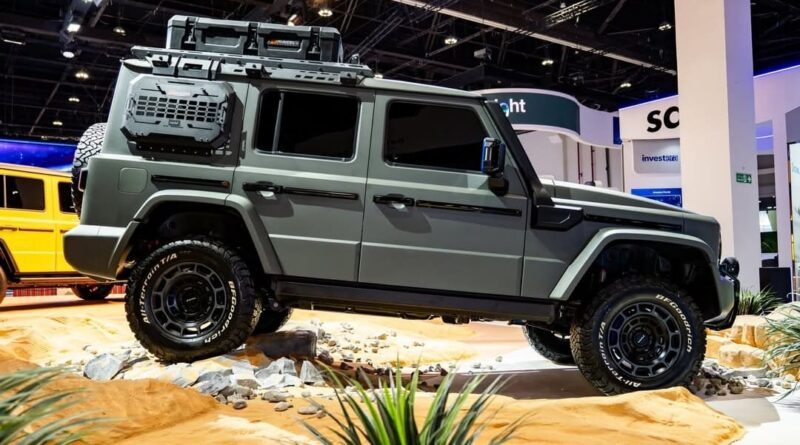
Dubai-Made Theeb X01 Draws Design Cues From Mercedes G-Wagen
Theeb X01 has emerged as one of the UAE’s most ambitious automotive design projects to date, positioning Dubai within the rapidly shifting global mobility landscape. Developed by the UAE-based mobility company K2, the SUV made its public debut at MIITE 2026 in Abu Dhabi, where the company presented the Base, Sport, and Luxury versions of the vehicle’s final concept.
Although Gulf nations have traditionally focused on energy, finance, and tourism, regional investment in automotive innovation has accelerated in recent years. Consequently, the launch of the Theeb X01 signals a broader regional push toward locally branded mobility projects that combine design, technology, and advanced manufacturing narratives.
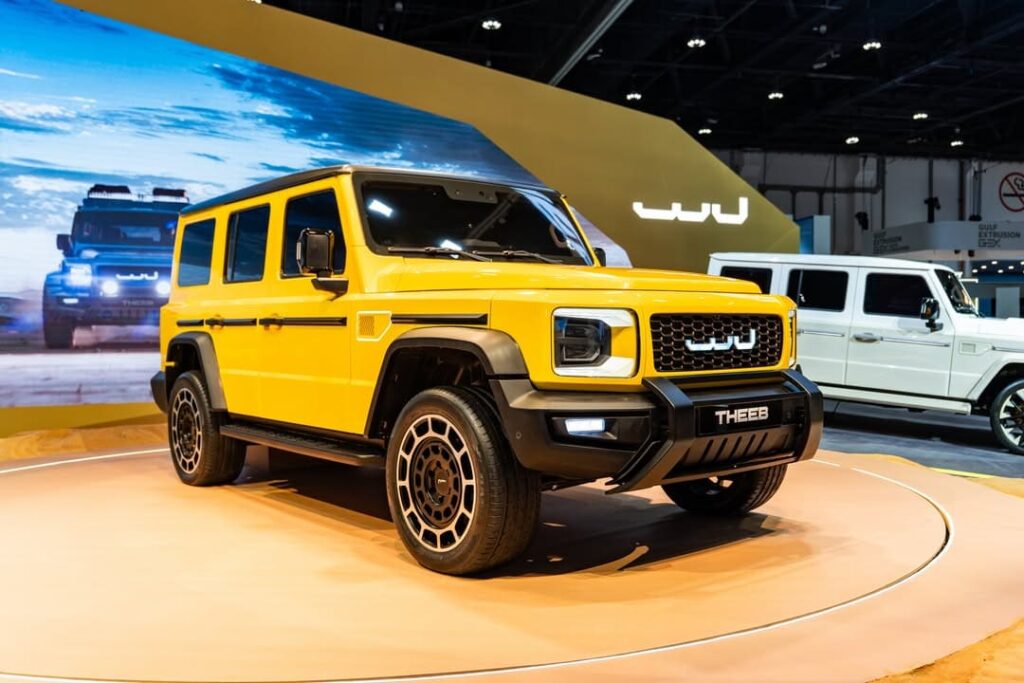
A G-Class-Inspired SUV With Hybrid Architecture
Visually, the Theeb X01 draws heavily on the iconic Mercedes-Benz G-Class, while incorporating design cues from compact off-road vehicles and modern luxury SUVs. Its boxy proportions, upright stance, and body-on-frame structure reinforce the vehicle’s utility-focused identity, whereas the interior adopts a more contemporary, high-tech layout.
According to K2, the X01 was fully designed in the UAE and developed as an “AI-ready” intelligent vehicle platform. However, the company has yet to release detailed information regarding autonomous systems or software architecture.
Technically, the SUV uses a plug-in hybrid powertrain combining a turbocharged 2.0-liter four-cylinder engine with dual electric motors. Together, the system reportedly produces 550 horsepower and 531 lb-ft of torque. In addition, the production version is expected to feature 13 driving modes designed for varied terrain and performance conditions.
While battery specifications and electric motor details remain undisclosed, the project reflects growing regional interest in electrified mobility solutions amid changing global energy and automotive policies.
Design, Manufacturing, and Regional Mobility Ambitions
The X01 enters a market increasingly shaped by Chinese automotive manufacturing and hybrid technology development. Industry observers have noted visual and structural similarities between the Theeb concept and the BAIC BJ80 platform, suggesting potential manufacturing or engineering ties with Chinese partners. Nevertheless, K2 continues to position the project as a UAE-led design initiative.
At the same time, the company is expanding beyond vehicle branding into autonomous mobility infrastructure. Through its affiliated platform, AutoGo.World, K2 currently operates autonomous vehicle trials around the Yas Marina Circuit, offering public robotaxi experiences within a limited zone.
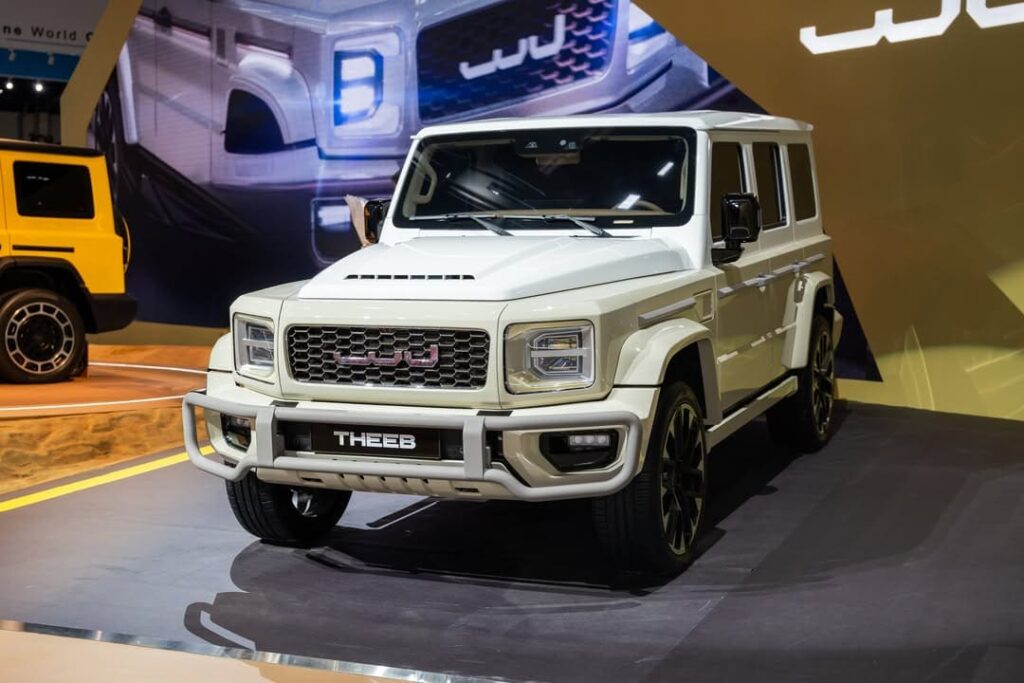
Therefore, the Theeb X01 appears to function not only as a standalone vehicle concept but also as part of a wider strategy centered on intelligent transportation systems and AI-driven mobility services.
The project arrives during a period of major transformation within the global automotive sector. As Western automakers reassess EV strategies and Chinese manufacturers expand internationally, Gulf countries are increasingly exploring opportunities to establish their own design and manufacturing ecosystems.
Whether the Theeb X01 advances into full-scale production remains uncertain. Still, its debut reflects the UAE’s growing ambition to participate directly in automotive innovation, industrial design, and future mobility development.