
Cadillac V-One Revealed as 830-HP Track Hypercar Based on Le Mans Racer
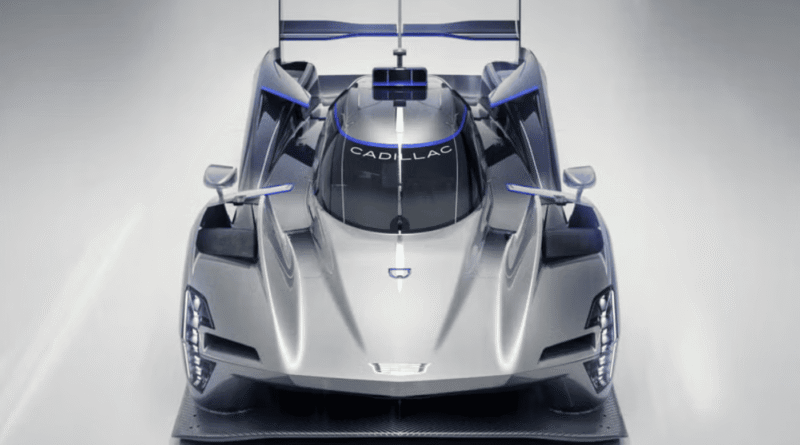
Cadillac has unveiled the V-One, a track-only hypercar concept developed from the brand’s championship-winning V-Series.R Le Mans prototype.
The model made its debut during Monterey Car Week at The Quail, A Motorsports Gathering. Rather than adapting a road car for circuit use, Cadillac has built the V-One around technology derived directly from its endurance racing programme.
The hypercar uses the same Dallara carbon-fibre monocoque and pushrod-actuated suspension architecture as the V-Series.R. However, because the V-One is not restricted by LMDh racing regulations, Cadillac has been able to increase the output of its naturally aspirated 5.5-litre V8 hybrid powertrain.
Cadillac V-One delivers 830 HP
The V-One produces a combined 830 horsepower, significantly exceeding the 670-horsepower limit applied to the V-Series.R under racing regulations.
Moreover, Cadillac is targeting lap times within 10% of its professional racing counterpart. At the same time, engineers have tuned the vehicle to make its performance more accessible to non-professional drivers.
This approach gives the V-One a different purpose from the competition car. While the V-Series.R is designed for professional endurance racing, the V-One combines racing-derived hardware with systems intended to help private customers manage its performance on a circuit.
The single-seat configuration also reinforces its track-focused character. Furthermore, the exposed carbon-fibre structure and aerodynamic bodywork maintain the proportions and visual character associated with Cadillac’s endurance racing prototype.
V-One combines racing technology with luxury
Cadillac has given the V-One a bespoke exterior treatment to distinguish it from the V-Series.R. The body features a hand-sprayed gradient that transitions from silver at the front to deep navy at the rear.
The colour treatment represents the transition from daylight to night during a 24-hour endurance race. Additionally, an illuminated physical Cadillac emblem replaces the conventional racing decal on the front structure.
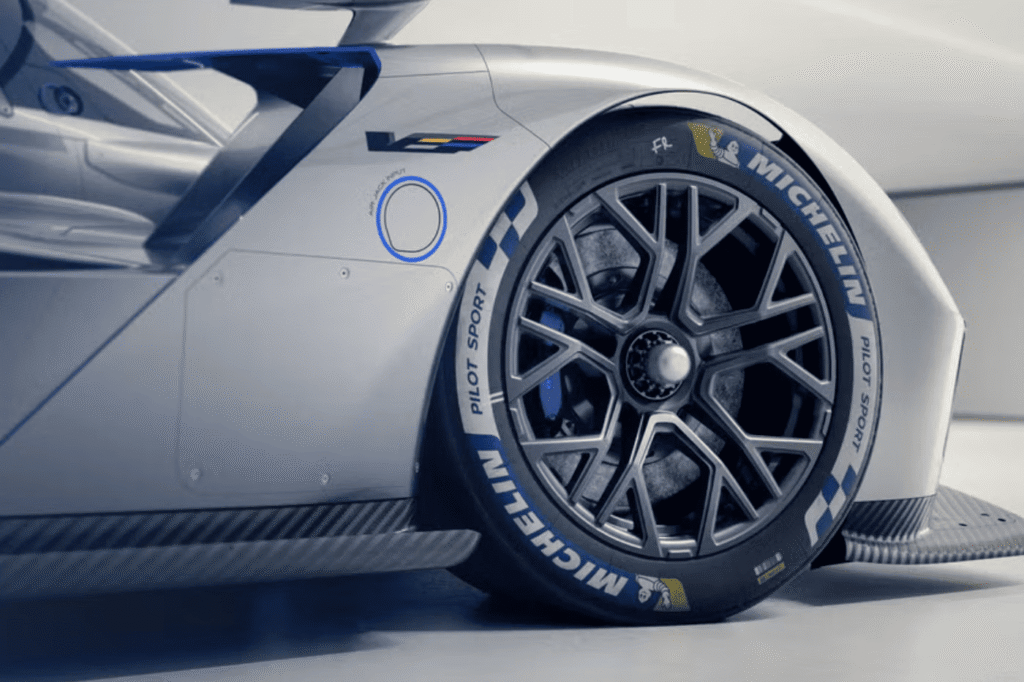
The car also features dark-persona badging and a bespoke V-Series wheel design developed specifically for the project.
Inside, the exposed carbon-fibre cockpit combines prototype racing hardware with Cadillac-specific luxury details. The cabin uses recycled fabrics from the Cadillac Collection, while a serialized door plaque highlights the vehicle’s exclusivity.
The driver’s seat is moulded to the customer’s physical specifications. Meanwhile, engineers have developed a custom user interface and dedicated steering-wheel button layout.
The interface provides telemetry information, visual feedback and driver coaching. As a result, the system is designed to help enthusiasts manage the V-One’s high-performance hybrid powertrain on a circuit.
Cadillac considers limited production
Cadillac has officially presented the V-One as a concept study. However, the company is also assessing the possibility of producing a limited number of customer cars.
If approved for production, the V-One would place Cadillac in the increasingly competitive market for low-volume track hypercars. The segment includes specialised programmes from manufacturers such as Ferrari, Aston Martin, and McLaren.
The use of a dedicated chassis constructor could also provide Cadillac with an existing manufacturing foundation if the project moves beyond the concept stage.
For now, the V-One remains a concept. However, its combination of Le Mans-derived engineering, 830 horsepower, and a customer-focused cockpit gives Cadillac a potential pathway into the ultra-low-volume track-car market.